Moving Averages Explained: Common Setups and Pitfalls
Definition
Moving averages are indicators that calculate the average price over a chosen number of periods and update as new data comes in. They are designed to smooth short-term fluctuations so the broader direction becomes easier to see. In forex trading and crypto trading, traders often use them to judge whether price is generally moving up, down, or sideways.
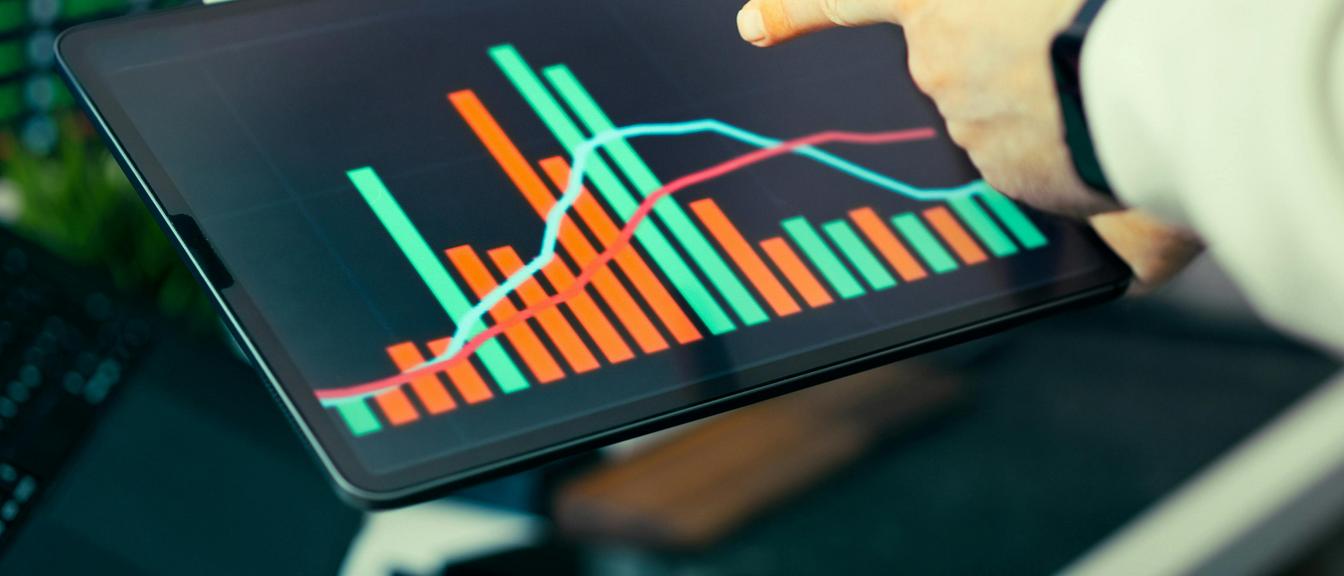
The main idea is simple: a moving average reduces noise. A shorter moving average reacts faster to price changes, while a longer one changes more slowly and filters out more of the smaller swings. That difference is why moving averages can serve different roles in analysis.
Why it matters for markets
Markets rarely move in a straight line, so a smoothing tool can help traders avoid overreacting to every candle. Moving averages matter because they make trend structure easier to identify and compare across timeframes. For many traders, this is the first step in deciding whether to favor trend-following or wait for a clearer setup.
They also matter because they are widely watched. When many traders focus on the same levels, price can react around them. That does not make moving averages magical, but it does mean they can become part of market behavior in practical ways. In some cases, broader catalysts such as forward guidance or GDP surprises can change how reliable a trend read looks.
How traders use it
Choosing the right type and length
A simple moving average gives each period equal weight, while an exponential moving average gives more weight to recent prices. In fast-moving markets, some traders prefer the exponential version because it responds sooner. In slower or more strategic analysis, a simple moving average may be easier to interpret.
The length you choose changes the signal. Short settings can be helpful for short-term entries, but they can also produce more false breakouts. Longer settings are slower but often provide a clearer picture of the broader trend.
Reading trend direction and momentum
When price stays above a rising moving average, traders often view that as a sign of upward momentum. When price stays below a falling moving average, they may see weakness. This does not guarantee continuation, but it can help frame what the market is doing right now.
Some traders also watch whether the moving average itself is flattening. A flattening line may suggest that momentum is fading, which can matter for both forex trading and crypto trading where trends can shift quickly. Rate-sensitive markets can also react differently when bond volatility rises.
Using crossovers with caution
Crossovers happen when one moving average crosses another, such as a short-term line moving above a longer-term line. Traders often use these as trend-change signals, but they work best when confirmed by the broader chart context. A crossover during sideways movement can easily fail.
This is one reason moving averages are often used inside a larger process. They can support a rule-based system in automated trading, but a trading bot or AI trading bot still needs filters such as volatility checks, support and resistance, or momentum confirmation. A separate stop-loss placement rule can also reduce damage when signals fail.
Examples
In forex trading, a trader might watch the 50-day and 200-day moving averages on a major currency pair. If the 50-day average is above the 200-day average and price keeps respecting the shorter line during pullbacks, the trader may treat that as a trend-following environment. If price repeatedly closes below both averages, they may become more selective about long entries.
In crypto trading, a trader may use a 20-period exponential moving average on a four-hour chart to monitor short-term trend direction. If Bitcoin pulls back to that average and then rebounds with strong candles, the trader may view it as a potential continuation setup. If the price slices through the average repeatedly, the market may be too choppy for that approach. For related context, see recent Bitcoin pullbacks and broader safe-haven flows.
Another example is using moving averages on multiple timeframes. A trader might use a 200-period average on the daily chart to understand the main bias, then a 20-period average on the one-hour chart to time entries. This helps separate the long-term picture from the short-term trigger.
Common mistakes
One common mistake is treating a moving average as a prediction tool. It does not predict the future; it only summarizes past prices. Traders who expect certainty from a lagging indicator often take poor entries.
Another mistake is using too many moving averages at once. A chart with several lines can look sophisticated, but it often creates confusion instead of clarity. A simpler approach is usually easier to test and maintain.
A third mistake is applying the same settings to every market and timeframe. What works in one asset or time horizon may not work in another. Volatility, session behavior, and trading style all affect how useful a setting will be.
A fourth mistake is ignoring context. A crossover near major support or resistance may mean something different from a crossover in the middle of a range. Moving averages are stronger when combined with price structure, not when used alone.
FAQ
What is the difference between a simple moving average and an exponential moving average?
A simple moving average gives equal weight to all periods in the calculation, while an exponential moving average gives more weight to recent prices. The exponential version usually reacts faster, which can be useful in fast markets. The simple version is slower and sometimes easier to read for broader trend analysis.
Which moving average is best for forex trading?
There is no single best setting for every trader or pair. Many traders experiment with shorter averages for entries and longer averages for trend direction. The right choice depends on timeframe, volatility, and the trader’s method.
Can moving averages be used for crypto trading?
Yes, moving averages are widely used in crypto trading because they help smooth volatile price action. They can be useful for identifying trend direction and pullback zones. However, crypto can be volatile enough that confirmation from price action is often important.
Can moving averages work in automated trading?
Yes, they are common inputs in automated trading systems because they are easy to define in rules. A trading bot can use them for trend filters, crossovers, or entry conditions. Still, a system should be tested carefully because moving averages can give false signals in sideways markets. If you are comparing automation options, the trade assistant and a bitcoin trading bot can be used as starting points for rule-based workflows.
Why do moving averages sometimes fail?
They fail most often when the market is choppy or range-bound. Because moving averages lag behind price, they can react late to sudden changes. That is why they are usually better as part of a broader strategy rather than a stand-alone signal.
Conclusion
Moving averages are simple, practical tools that can help traders read trends, filter noise, and structure decisions more clearly. They are useful in both forex trading and crypto trading, but they work best when combined with context, patience, and risk management. If you want more educational guides on market structure and trading tools, visit PlayOnBit.