Support and Resistance Explained With Practical Examples
Definition: What support and resistance mean
Support and resistance are price areas on a chart where the market has historically reacted. Support is the zone where a decline may slow down because buyers step in. Resistance is the zone where an advance may stall because sellers become more active. In forex trading and crypto trading, these areas are not guaranteed turning points, but they often help traders understand where the balance between buyers and sellers may shift.
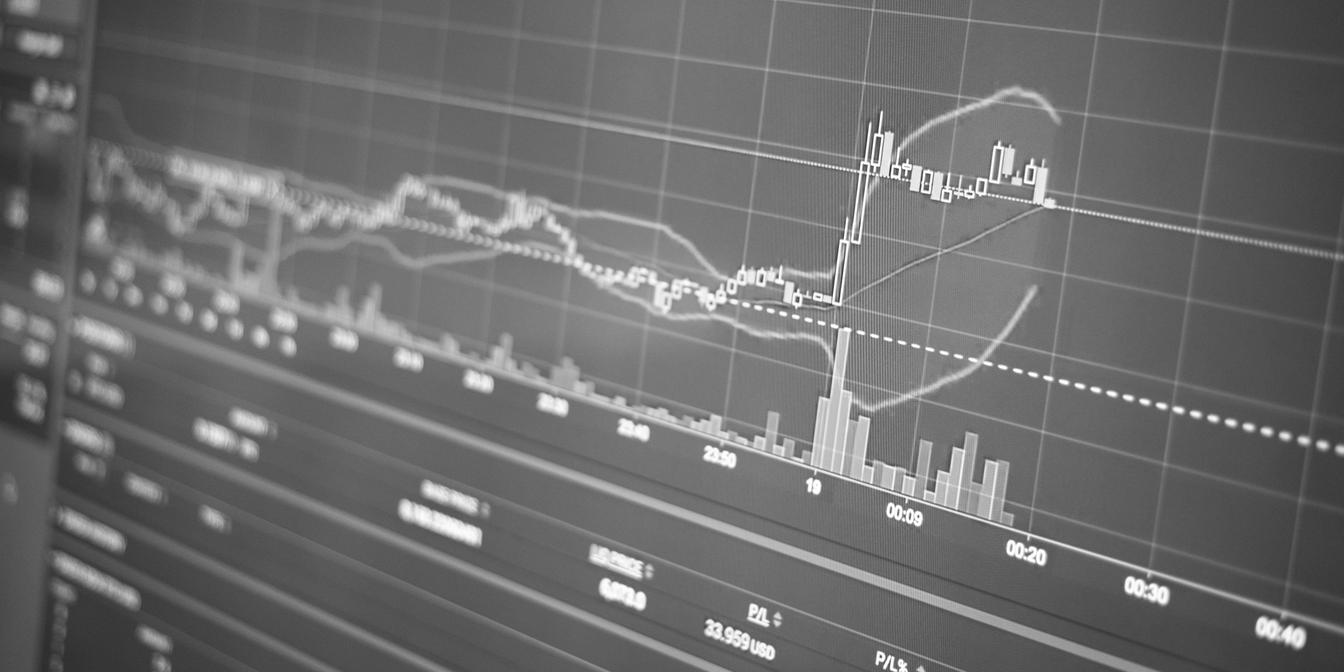
A simple way to think about support is as a floor and resistance as a ceiling. Price may bounce off the floor, break through the ceiling, or move sideways between them. The more often price reacts near a zone, the more traders tend to watch it. Still, the market can move through these areas, so they should be treated as decision points rather than absolute barriers.
Why it matters for markets
Support and resistance matter because they reflect crowd behavior. Traders remember areas where the market previously reacted, and those memories can shape future orders. In practical terms, this can create clusters of buying or selling interest around the same price region. For that reason, support and resistance are useful for identifying possible turning points, breakouts, and periods of consolidation.
These levels also help traders manage risk. If a trade idea is based on a bounce from support, the stop-loss can be placed beyond the zone where the idea would no longer make sense. If price breaks resistance with strength, some traders interpret that as a sign that momentum may be changing. This is one reason support and resistance are common tools in both discretionary trading and automated trading systems that scan charts for patterns.
How traders use it in practice
Traders usually begin by looking left on the chart to find areas where price reversed, paused, or accelerated in the past. They then mark the zone rather than a single exact price. This matters because markets often overshoot a little before reversing, especially in fast-moving crypto trading sessions or during major forex news periods.
Many traders wait for confirmation before acting. For example, if price reaches support, they may look for a rejection candle, stronger volume, or a slower decline before considering a long trade. If price reaches resistance, they may wait for signs that buying is weakening before considering a short trade. This approach can help reduce impulsive entries and is often easier to combine with a trading bot or AI trading bot that follows predefined rules.
Support and resistance are also useful for setting targets. A trader buying near support may aim for the next resistance area as a realistic exit zone. A trader selling near resistance may look toward the next support area for profit-taking. In this way, the concept supports a structured trading plan instead of relying on guesswork.
Examples from forex and crypto
In forex trading, imagine EUR/USD repeatedly falling toward 1.0800 and bouncing higher over several sessions. That area may become a support zone because buyers have consistently appeared there. If the pair later rises toward 1.0900 and stalls several times, that zone may act as resistance. A trader might use the area between those levels to plan entries, exits, and risk controls.
In crypto trading, suppose Bitcoin has declined toward $60,000 multiple times and each time buyers have stepped in. That level can be treated as support, not because it is magical, but because the market has shown repeated interest there. If Bitcoin later rallies toward $68,000 and struggles to move above it, that area may act as resistance. A trader watching the chart could use those zones to decide whether to buy a bounce, wait for a breakout, or stay out until the market shows clearer direction. For a live example of price holding a key support area, see how support appears in a live market context. Another example is 76K resistance, which shows how resistance can cap rallies in crypto.
Another practical example is a breakout. If a currency pair breaks above resistance and then returns to test the same area from above, that former resistance can sometimes become new support. Traders often watch this behavior because it can signal that the market has accepted the new price range. The same idea is common in crypto trading when a coin moves through a level that had previously capped price for days or weeks. A related live-market case is near resistance, where repeated price reactions help define the level.
Common mistakes traders make
One common mistake is treating support and resistance as exact numbers. In reality, they are usually zones, and price may briefly exceed them before reversing. Using a narrow mindset can lead to premature entries or stops that are too tight.
Another mistake is drawing too many levels. If every small swing becomes a major level, the chart becomes cluttered and less useful. Traders often get better results by focusing on the clearest areas where price reacted more than once.
A third mistake is assuming a level will hold forever. Strong news, changing market conditions, and major shifts in sentiment can cause a break. Even a well-respected level can fail, which is why risk management matters more than any single chart pattern.
A final mistake is ignoring context. Support and resistance work better when combined with trend, timeframe, and market structure. A level on a five-minute chart may matter for a short-term trading bot, but it may not be as important as a weekly level for a longer-term trader. Timing also matters, since stronger moves often occur during active liquidity windows, while entries in fast markets can slip beyond expected prices.
FAQ
What is the difference between support and resistance?
Support is a zone where price may find buying interest and stop falling, while resistance is a zone where price may encounter selling pressure and stop rising. Traders use both to understand where the market might pause or reverse.
Are support and resistance exact prices?
No. They are usually better understood as areas or zones. Markets can move slightly beyond a level before reacting, so a narrow line is often less useful than a broader zone.
Can support become resistance?
Yes. When a support area breaks, it can sometimes act as resistance later if traders see the broken level as a place to sell. The reverse can also happen when resistance breaks and becomes support.
How do traders confirm a level?
Traders often look for repeated reactions, reversal candles, momentum changes, or volume shifts around the area. In forex trading and crypto trading, confirmation helps reduce false signals, though it never removes risk completely. When confirmation fails repeatedly, traders may need to review entries around losing streaks to keep risk under control.
Can support and resistance be used with automated trading?
Yes. Many automated trading strategies and a trading bot can be programmed to recognize price zones, breakouts, or retests. Still, rules should be tested carefully because market conditions change over time. Traders who want to pair this approach with tools can explore the trade assistant or the bitcoin trading bot.
Conclusion
Support and resistance are simple ideas, but they remain useful because they help traders read market structure and make more disciplined decisions. Whether you are analyzing forex trading charts or following crypto trading moves, these levels can improve timing, risk management, and trade planning. They are not perfect and should never be used alone, but they can become a strong foundation for a practical trading process. If you want more educational guides like this, visit PlayOnBit and keep building your market skills one concept at a time.